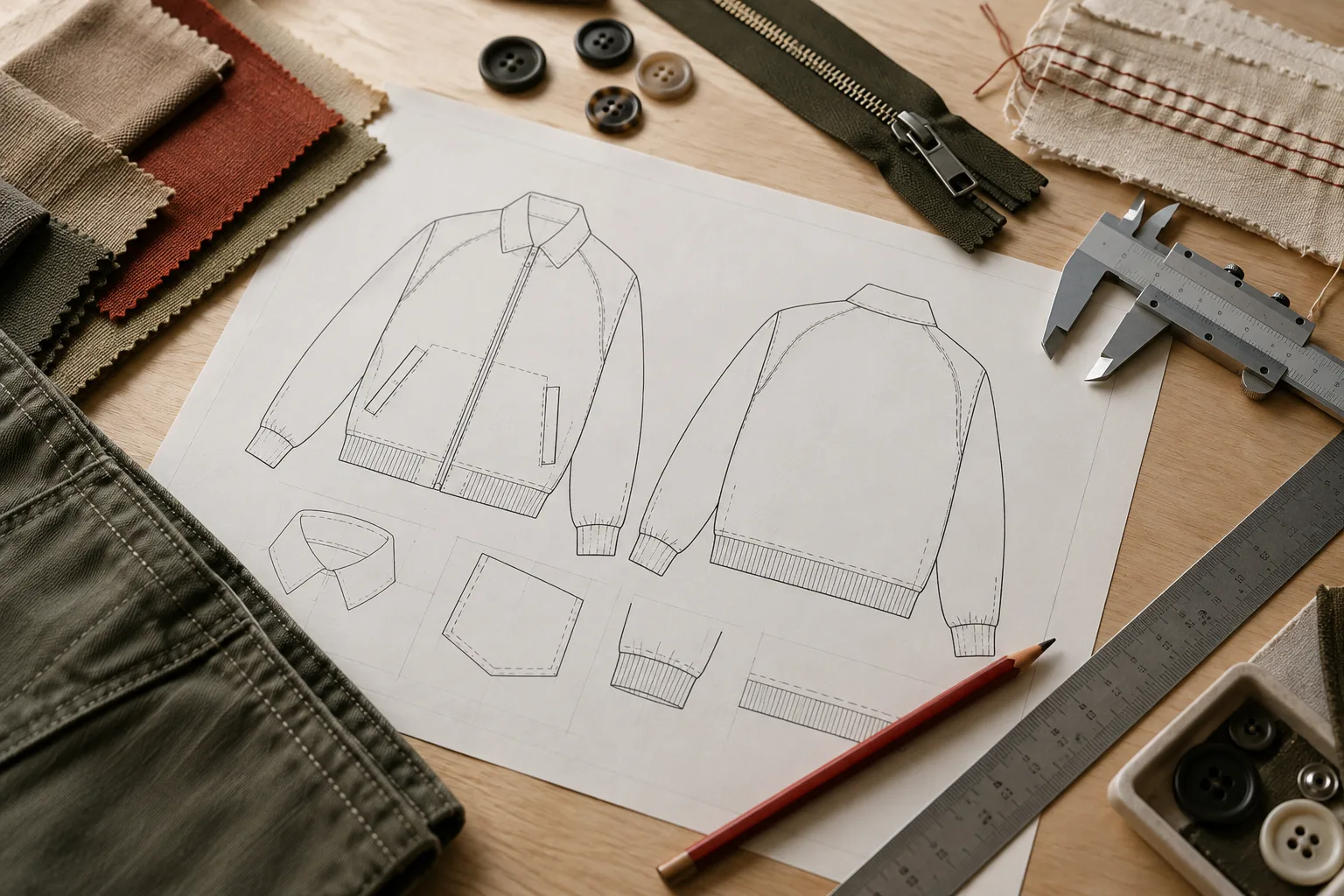
A clothing tech pack is the working specification that connects a design to sampling, costing and production. It records what the garment is, how it should be made and how its result will be checked. The goal is not to produce the most pages. The goal is to remove expensive ambiguity while keeping genuine development questions visible.
Factories can quote from sketches and reference garments, but an early quote will contain assumptions. If those assumptions change during sampling, the price, minimum and lead time can change with them. A clear tech pack lets the manufacturer identify materials, operations and risks earlier. It also gives both sides one shared place to record revisions instead of relying on scattered messages.
Start with one product definition
Give every style a unique name or number and a revision date. State the product category, intended customer and fit direction. Add clean front and back flats, then include side or internal views only where they clarify construction. A flat drawing is not a fashion illustration: it should show seams, panels, pockets, closures, rib, topstitching and visible hardware in consistent proportion.
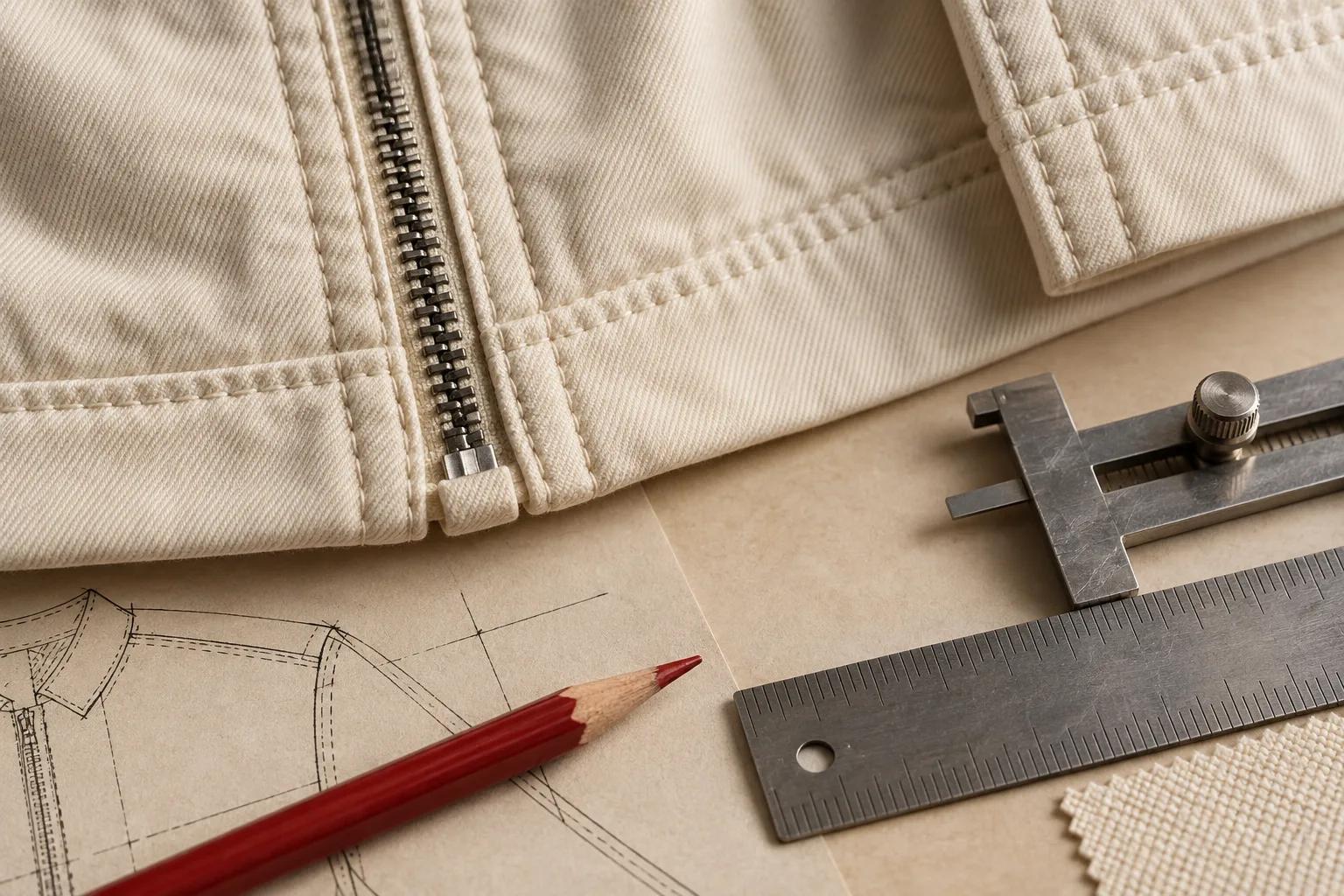
Use callouts that connect notes to exact features. “Premium zipper” is subjective. “Two-way size-five metal zipper, antique nickel finish, black tape” is assessable. If the factory should recommend the specification, write that as an open decision and describe the required effect. This is more useful than filling a gap with a detail you have not chosen.
The core pages of a practical tech pack
- Cover and revision record: style identity, season or project, owner, date and a clear history of changes.
- Technical flats: front, back and relevant detail views with numbered construction callouts.
- Bill of materials: shell, lining, rib, thread, labels, closures, hardware, artwork and packaging.
- Colourways: approved colour references and a clear map of which component receives each colour.
- Measurement specification: points of measure, base-size values, grade rules and tolerances.
- Artwork pages: dimensions, placement, colours, technique and production-ready source-file references.
- Make and finish notes: stitch types, seam finishes, wash, pressing, inspection and packing requirements.
Not every first enquiry needs all seven sections finished. A factory can help develop a product, but it needs to know which service you are requesting. Separate confirmed specification from reference, preference and manufacturer recommendation. That simple status system prevents a mood image from being mistaken for a construction instruction.
Build a measurement sheet that can be repeated
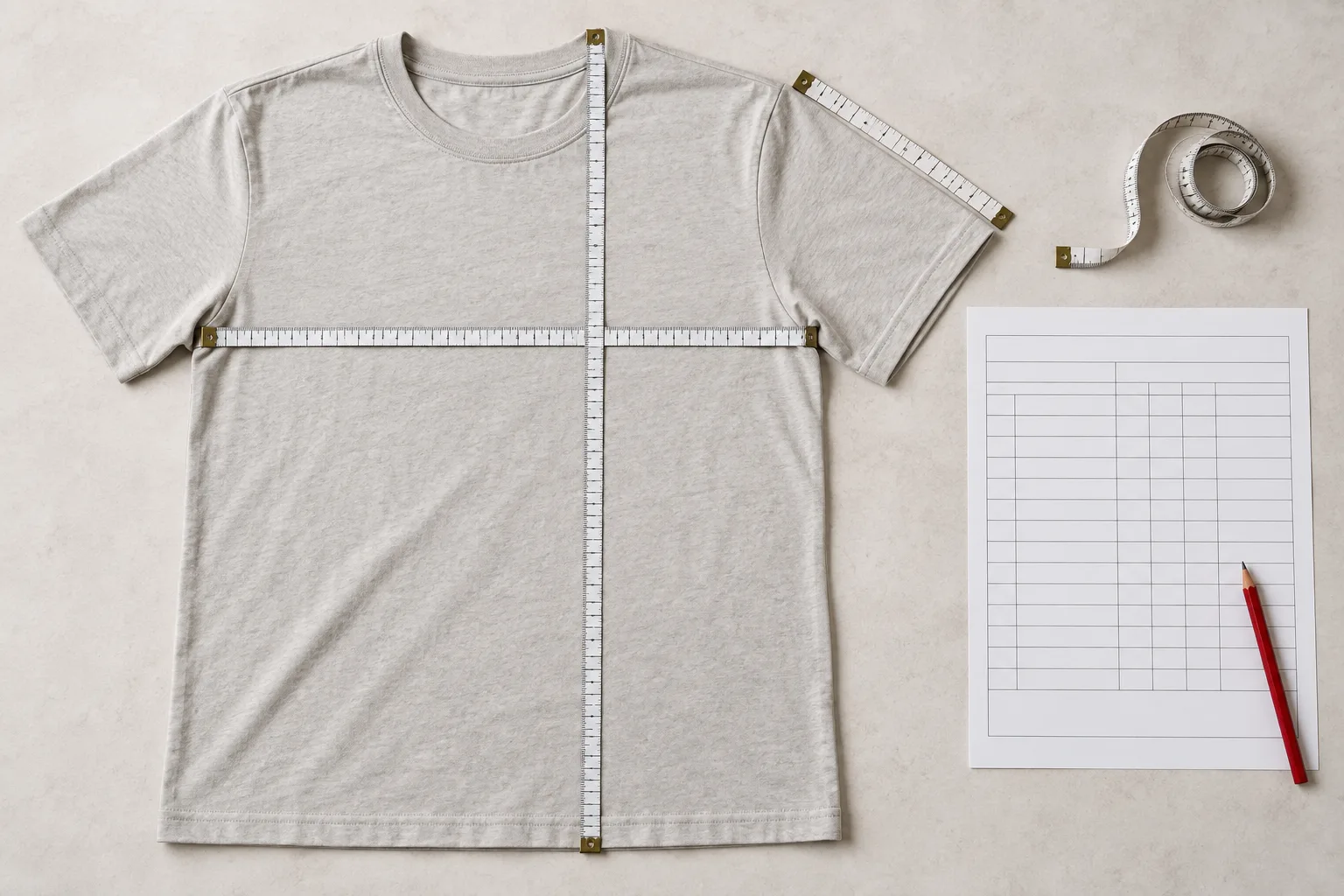
A measurement table is useful only when two people can measure the same garment in the same way. Name each point of measure and show its method with a diagram. “Chest” could mean half-chest measured one inch below the armhole, a full circumference, or a measurement at another position. Define the garment state as well: laid flat, closed, relaxed, stretched or measured along a curve.
Begin with a base size. Add the target measurement, tolerance and grade to adjacent sizes. Tolerance describes acceptable production variation; it is not an extra allowance for uncertain design. Set tighter tolerances on features that control function or alignment and realistic tolerances on measurements affected by soft fabric, elastic or wash.
Specify material without closing the door to expertise
For fabric, record fiber composition, construction, weight, stretch, finish and colour. A request for “cotton” could lead to jersey, interlock, poplin, twill or fleece with completely different cost and performance. If you have a physical reference, say what you want to match: surface, drape, thickness, recovery, wash or hand feel. Send the reference with an identifying note rather than expecting a photograph to communicate all of those properties.
The bill of materials should use one line for every component and identify placement, colour, size, supplier or acceptable alternative. Include main label, care label, size label and packaging even if the artwork is pending. Small components are easy to overlook during quoting and often create delays because their suppliers operate on different minimums.
Make the first version quote-ready
Before sending the pack, check that the title and revision match on every page, the units are consistent, every artwork has dimensions, every colour has a reference, and every callout points to something visible. Remove abandoned options. If two alternatives genuinely need prices, label them as separate quote scenarios rather than leaving both inside one instruction.
- Can the factory identify every material and trim it must source?
- Can the sample room see how the garment is assembled and finished?
- Can quality control measure the result with the same method you used?
- Are pending decisions named, with responsibility for recommending or approving them?
- Does the requested quantity, colour split and delivery point appear outside the drawing pages?
A tech pack will evolve. Sampling exists to test it against material and construction reality. The disciplined part is not pretending the first version is final; it is recording each approved decision so the costing, sample and production order continue to describe the same garment.