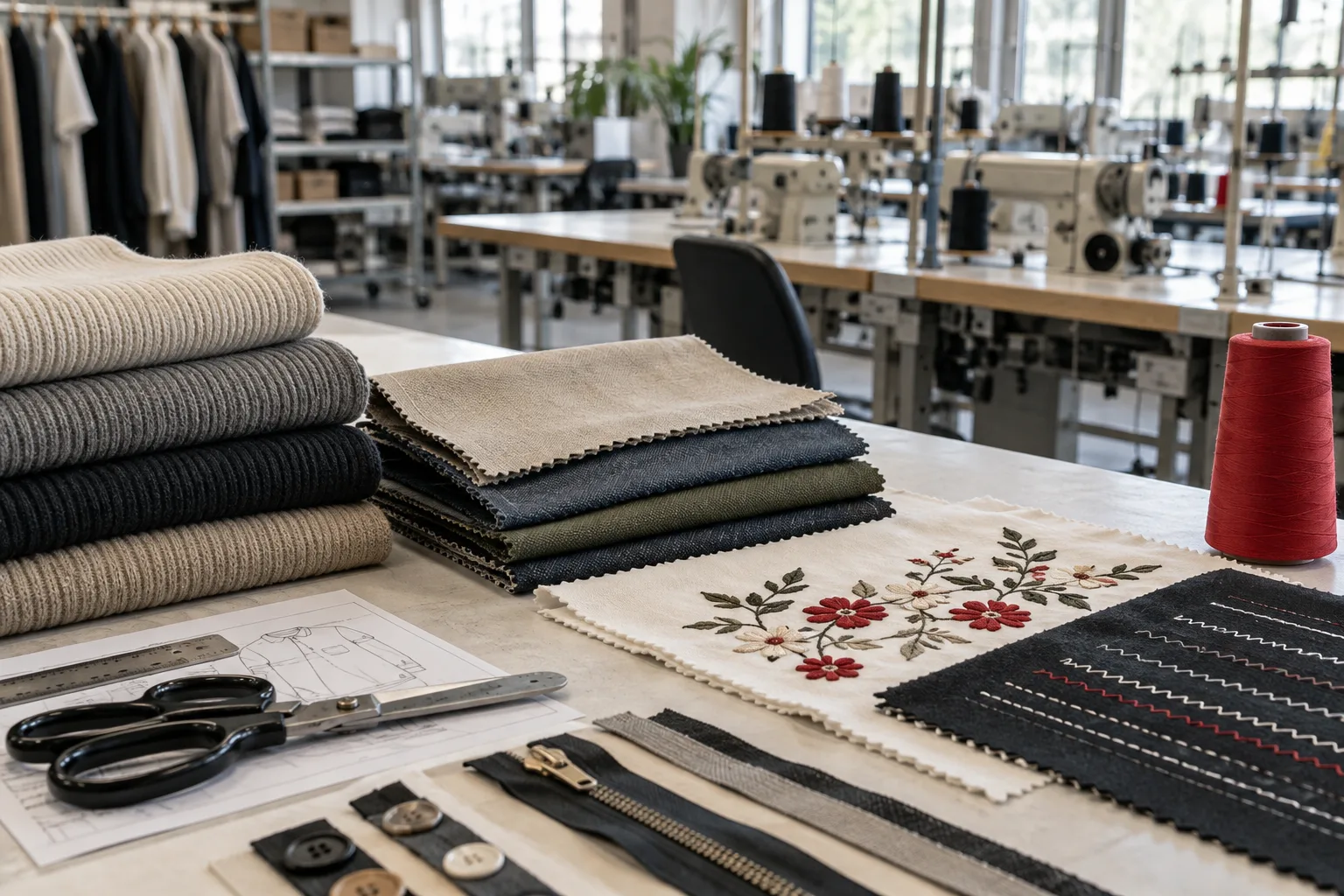
Choosing a clothing manufacturer is an exercise in fit. A large factory with impressive equipment can be wrong for a small, development-heavy order. A flexible sample room can be excellent at prototypes but unable to control repeat bulk production. The goal is to match your product, quantity, quality level and working style to a production system that handles those conditions routinely.
Begin by making your own requirement legible. Define the product category, materials, construction, decoration, size range, quantity by colour, target timing, delivery market and the development support you need. Without that brief, supplier comparisons tend to reward fast replies and low opening prices instead of relevant capability.
Look for product and process alignment
Ask what the factory makes every week, not everything it has ever made. A team that regularly produces cotton jersey T-shirts understands neck rib, spirality, shade control and common print routes. A structured outerwear factory organizes different machines, pressing, fusing, lining and hardware. Capability lists are broad; repeat production reveals the real centre of competence.
Trace any special process. Determine whether knitting, dyeing, washing, embroidery, printing, pleating or bonding happens inside the facility or through a partner. Outsourcing is normal, but responsibility should be clear. Who approves the subcontractor, controls shade, checks output, manages delays and carries rejected work?
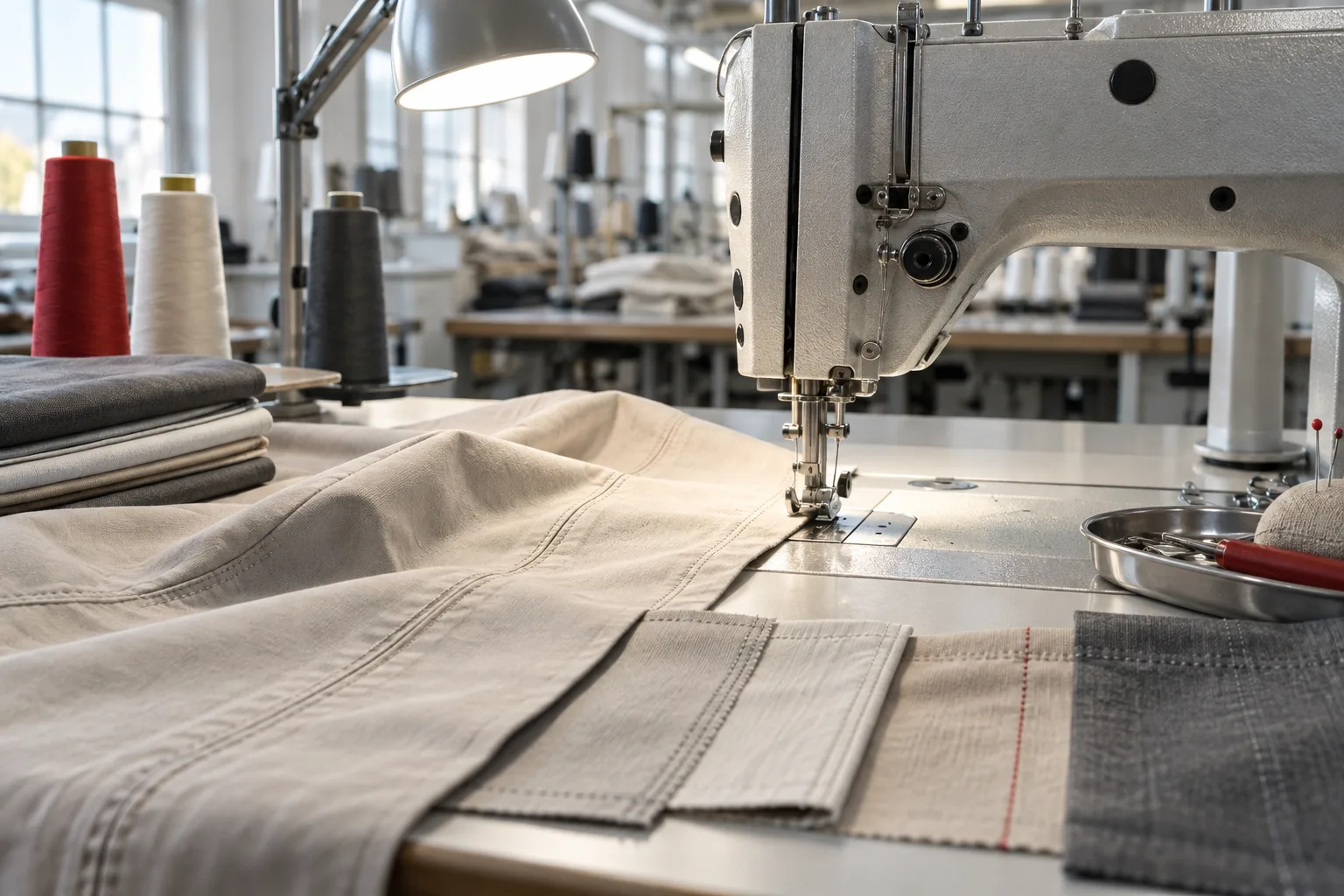
Evaluate the whole operating match
- Product capability: similar fabrics, seam types, machinery, decoration and finishing.
- Order fit: workable minimum by style and colour, line size and realistic monthly capacity.
- Development: pattern, grading, material sourcing, sampling and technical communication.
- Quality system: incoming checks, in-line inspection, final inspection, testing and corrective action.
- Commercial clarity: itemized quote basis, payment terms, lead time, exclusions and change control.
- Compliance fit: legal, labour, safety, material or market requirements that genuinely apply to your order.
- Communication: named responsibility, response quality, revision control and willingness to state uncertainty.
Read communication as production evidence
Fast communication is useful, but precise communication is more predictive. A strong supplier asks about missing information, separates confirmed details from assumptions and explains which decisions affect cost or lead time. Watch how revisions are recorded. If a colour, measurement or trim changes, does the team update one controlled document, or does the decision remain buried in a message thread?
Notice whether the person quoting remains connected to technical and production teams. Sales confidence cannot replace a sample-room review. When an answer depends on a mill or specialist process, a credible response may take longer because the factory is confirming it. The important signal is a clear owner and a specific follow-up, not an immediate promise.
Verify quality before bulk
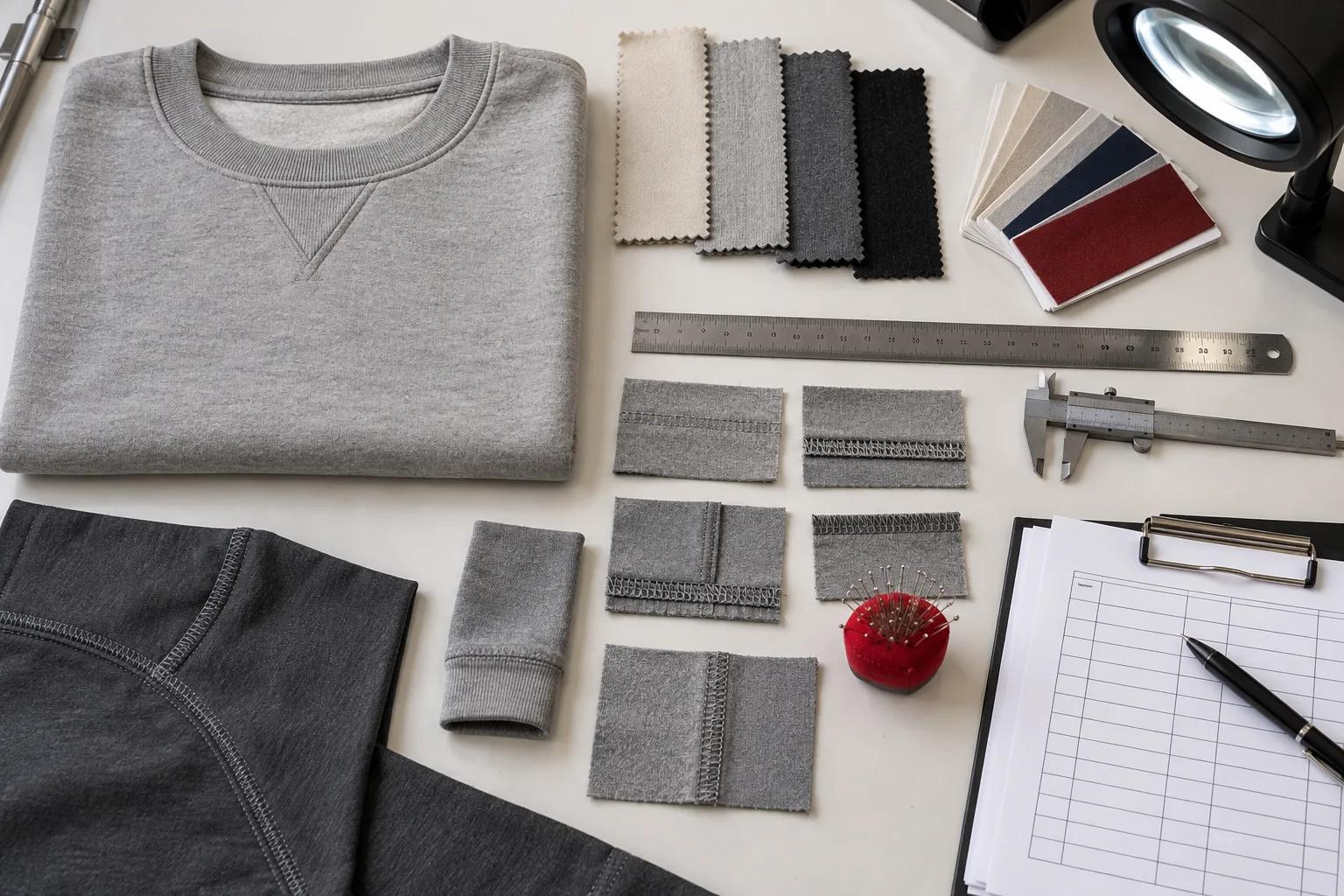
Request relevant samples or arrange a paid development sample. Inspect measurement, symmetry, stitch balance, seam security, pressing, surface damage, shade and finishing. Wash or wear-test the sample according to the product use. One good sample does not guarantee bulk consistency, but it reveals how the factory interprets the specification and responds to feedback.
Ask for the proposed quality plan. It should name checkpoints and acceptance criteria: fabric inspection, shade grouping, first output review, in-line measurement, end-line appearance, needle control where relevant, final random inspection and packing verification. If independent inspection or testing is required, agree the standard, timing, cost and consequences of failure before production.
Use evidence carefully
Business registration, audit reports and certificates can support due diligence, but each document has a scope, site, issuer and validity period. Confirm that the facility named is the one making your goods and that the standard applies to the claim being made. Do not treat a logo on a presentation as proof. For sensitive requirements, verify through the scheme owner or qualified professional.
A visit or live video walk-through can connect documents to operations. Follow the material path from receiving to storage, cutting, sewing, finishing, inspection and packing. Look for identification, separation of lots and visible work instructions. Ask how nonconforming material is contained and how approved samples reach operators.
Run a controlled first order
Start with a production quantity that is commercially real but bounded enough to learn. Freeze the approved sample, tech pack, bill of materials, colour standards, size set and packing instructions. Confirm a time-and-action calendar with approval dates rather than only a final ship date. Late buyer approvals can move the schedule just as surely as factory delays.
- Record every approved sample and document revision.
- Confirm bulk material before cutting and size-set measurements before full sewing.
- Agree who can authorize substitutions, repairs or shipment of short quantities.
- Keep inspection evidence and review defects by cause, not only by count.
- After delivery, score quality, timing, communication and commercial accuracy before reordering.
The best manufacturer is not the one that says yes to every request. It is the one that understands the work, identifies constraints early, makes controlled recommendations and produces repeatable results under the terms you agreed. A clear enquiry gives that factory a chance to recognize that your order fits.